
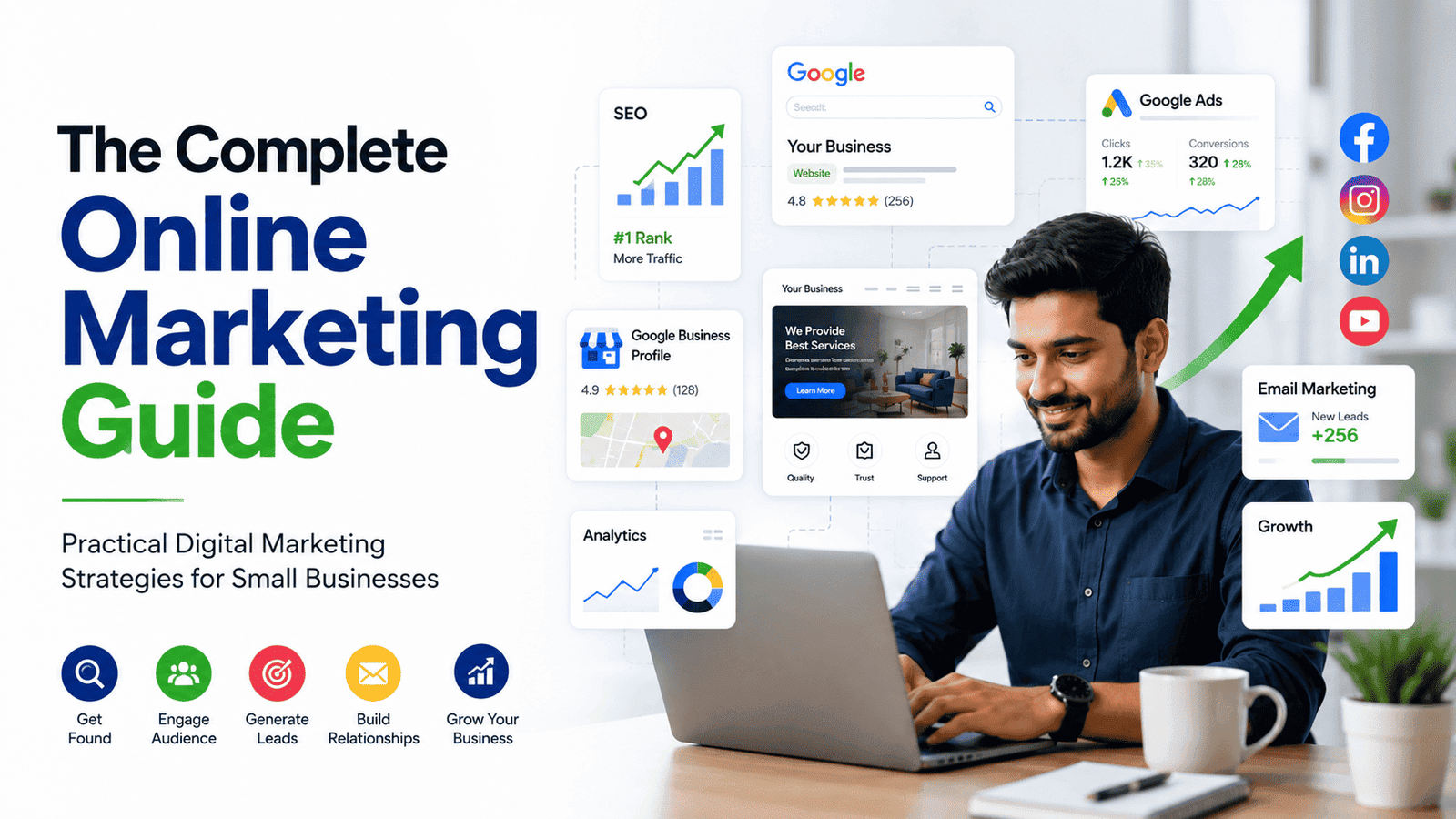
The Complete Online Marketing Guide Every Small Business Owner Needs to Read
By Startup Matricks Team
Contributor

Running a small business is rewarding, but attracting new customers consistently can be challenging. Today's customers search online before making a purchase, compare businesses, read reviews, and visit websites before deciding who to trust. If your business isn't visible online, you're likely missing opportunities to connect with potential customers.
Whether you're starting a new business or looking to improve your online presence, having a clear marketing strategy is more important than ever. The right digital marketing strategies for small business can help you reach the right audience, generate qualified leads, and build sustainable growth without overspending.
In this guide, you'll learn practical ways to market your business online, understand which channels work best, and make smarter marketing decisions based on your goals and budget.
Quick Answer
The most effective digital marketing strategies for small business combine multiple online channels that work together. Rather than relying on one platform, businesses should focus on building a strong website, improving search visibility, creating valuable content, engaging on social media, and tracking marketing performance.
A solid online marketing strategy typically includes:
- Search Engine Optimization (SEO)
- Local SEO
- Content Marketing
- Google Business Profile Optimization
- Social Media Marketing
- Google Ads
- Email Marketing
- Performance Tracking with Google Analytics and Google Search Console
Each strategy supports different stages of the customer journey, helping businesses attract, engage, and convert potential customers.
Why Online Marketing Matters for Small Businesses
Consumer behavior has changed significantly over the last decade. Before contacting a business, people often:
- Search on Google
- Compare multiple websites
- Read customer reviews
- Visit social media profiles
- Look for pricing and services
Businesses that appear during these searches have a greater chance of earning trust and generating enquiries.
Online marketing also provides measurable results, allowing businesses to understand which marketing activities generate leads and which need improvement.
How to Market a Small Business Online
Build a Professional Website
Your website acts as your digital storefront. It should clearly explain your services, answer common customer questions, and make it easy for visitors to contact your business.
A good business website should include:
- Fast loading speed
- Mobile-friendly design
- Clear navigation
- Service pages
- Contact information
- Customer testimonials
- Clear calls to action
A well-optimized website improves both user experience and search engine rankings.
Invest in Search Engine Optimization (SEO)
SEO helps your website appear when customers search for products or services related to your business.
Important SEO activities include:
- Keyword research
- Technical SEO improvements
- Content optimization
- Internal linking
- Core Web Vitals optimization
- Quality backlink building
- Regular content updates
Unlike paid advertising, SEO continues generating organic traffic over time when maintained consistently.
Improve Your Local SEO
If your business serves a specific city or region, Local SEO can help customers find you when searching for nearby services.
Key Local SEO activities include:
- Optimizing your Google Business Profile
- Keeping business information consistent
- Collecting genuine customer reviews
- Using location-specific keywords
- Adding local business schema
For example, a local bakery or repair service can attract nearby customers through Google Maps and local search results without relying entirely on paid advertising.
Create Helpful Content
Content marketing builds trust by answering customer questions before they contact your business.
Useful content includes:
- Blog articles
- Service guides
- Frequently Asked Questions
- Case studies
- Videos
- Checklists
For example, a home renovation company could publish articles explaining renovation costs, planning tips, or material comparisons. This helps customers make informed decisions while improving search visibility.
Use Social Media with Purpose
Social media helps businesses build relationships with existing and potential customers.
Instead of posting randomly, create content that provides value:
- Customer success stories
- Educational tips
- Product demonstrations
- Behind-the-scenes updates
- Industry news
- Short videos
Consistency matters more than posting on every platform.
Run Paid Advertising Strategically
Google Ads and Meta Ads help businesses reach customers who are actively searching or browsing online.
Successful advertising depends on:
- Audience targeting
- High-quality landing pages
- Conversion tracking
- Budget optimization
- Continuous testing
A startup launching a new service may use Google Ads to generate immediate enquiries while building SEO for long-term visibility.
Build Long-Term Customer Relationships with Email Marketing
Email marketing remains one of the most cost-effective digital marketing channels.
Businesses can use email to:
- Share promotions
- Introduce new services
- Send newsletters
- Educate customers
- Encourage repeat purchases
Regular communication helps maintain customer relationships beyond the first sale.
SEO vs Google Ads
Many successful businesses combine both strategies to balance immediate lead generation with long-term growth.
Affordable Digital Marketing for Small Business
Many business owners assume online marketing requires a large budget. In reality, several effective strategies require more consistency than money.
You can start by:
- Optimizing your website
- Improving Local SEO
- Publishing helpful blog content
- Maintaining your Google Business Profile
- Posting regularly on social media
- Building an email subscriber list
- Monitoring performance using Google Analytics and Google Search Console
These activities create a strong foundation before increasing investment in paid advertising.
Common Mistakes to Avoid
- Launching a website without basic SEO optimization.
- Running advertising campaigns without tracking conversions.
- Ignoring mobile users and website speed.
- Publishing content without understanding customer search intent.
- Targeting every marketing channel instead of focusing on the most relevant ones.
- Failing to review analytics and improve campaigns based on performance data.
Best Practices
- Define clear marketing objectives before choosing channels.
- Focus on creating helpful content that answers customer questions.
- Regularly update your website with fresh information.
- Track website traffic, leads, and conversions consistently.
- Improve landing pages to increase conversion rates.
- Review marketing performance monthly and adjust your strategy based on data.
Frequently Asked Questions
1. What are the best digital marketing strategies for small business?
The most effective strategies include SEO, Local SEO, content marketing, Google Ads, social media marketing, email marketing, and maintaining a fast, user-friendly website. Combining these channels creates a balanced marketing strategy that supports long-term growth.
2. How can I market a small business online with a limited budget?
Start by optimizing your website, creating valuable content, improving your Google Business Profile, and focusing on Local SEO. These methods require consistent effort rather than large advertising budgets.
3. Is SEO better than paid advertising?
SEO and paid advertising serve different purposes. SEO builds long-term organic visibility, while Google Ads generates immediate traffic. Many businesses benefit from using both together.
4. How long does digital marketing take to show results?
Paid advertising can produce leads within days, while SEO and content marketing typically require several months to generate consistent organic traffic and enquiries.
5. Why is Local SEO important for small businesses?
Local SEO helps businesses appear in location-based searches and Google Maps results. This improves visibility among customers who are actively looking for nearby products or services.
6. Which tools help measure digital marketing performance?
Google Analytics, Google Search Console, Google Business Profile Insights, and advertising platform dashboards help businesses monitor website traffic, user behavior, conversions, and campaign performance.
Conclusion
Building a successful online presence doesn't mean using every marketing channel at once. Instead, focus on strategies that align with your business goals, understand your target audience, and measure results consistently.
By combining SEO, content marketing, Local SEO, paid advertising, and performance tracking, small businesses can create a sustainable marketing strategy that generates both immediate opportunities and long-term growth.
If your business needs support with SEO, paid advertising, website development, or digital growth planning, Startup Matricks helps startups and small businesses build sustainable online growth through practical, data-driven marketing strategies.